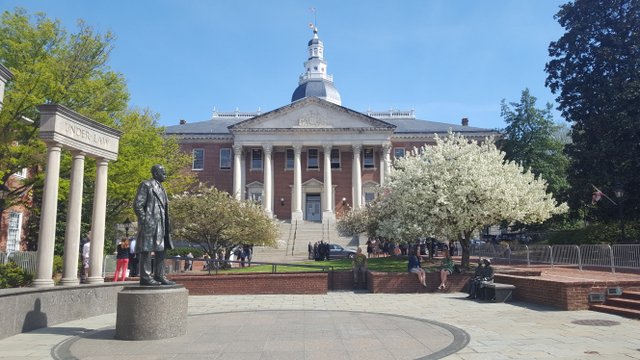
On Monday, Maryland’s legislative session ended after a whirlwind 90 days. We faced headwinds with a difficult financial picture as Marylanders grappled with the impact of the federal government’s layoffs and funding cuts.
Clean Water Priorities Passed:
HB0429/SB0599: After a few years of effort, we finally passed legislation creating an On-Farm Organics Diversion and Recycling Grant program! This bill, sponsored by Delegate Boyce and Senator Hester, builds on Maryland’s existing efforts to divert food waste from the trash by funding infrastructure and programs for on-farm composting, compost use, wasted food prevention, and food rescue. The legislature included an annual $250,000 appropriation to fund these programs in 2028 once established.
Clean Water Priorities Not Passing This Year:
HB0146/SB0165, Septic System Inspections: Delegate Guyton and Senator Brooks's bill would have required a septic system inspection when a home is sold, or at least every three years when a rental home gets a new tenant. Inspections are an effective tool to catch these failing septic systems earlier, protecting human health and the environment from untreated waste. Unfortunately, the legislation stumbled in the Senate this year. We will be back next year continuing to work on this common-sense step to proactively catch failing septic systems.
HB1268/SB0781 & HB1287/SB0780, CHERISH Our Communities Act: This landmark environmental justice legislation developed by the Mid-Atlantic Justice Coalition’s Maryland table would have adopted best practices from New Jersey, Minnesota, and New York to Maryland to protect disproportionately polluted communities from the cumulative impacts of pollution.
Unfortunately polluting industries succeeded in blocking the passage of a meaningful foundation for progress on environmental justice this year, despite support from the Maryland Community Coalition for the Environment, the Maryland Legislative Black Caucus, the Maryland Legislative Latino Caucus, the Maryland State Council on Cancer Control, the Maryland Commission on Environmental Justice and Sustainable Communities, the League of Women Voters, the Maryland Children’s Environmental Health and Protection Advisory Council, and many more. Read more in Maryland Matters.
SB0342/HB0331, The Bottle Bill: Every year in Maryland, over 5.5 billion beverage containers are sold, yet only one in four is recycled. That means more than 4 billion bottles and cans are tossed every year, piling up in landfills, spewing toxins in incinerators, or polluting our rivers and streams to threaten wildlife and contaminate drinking water. The Bottle Bill would have dramatically increased recycling rates and decrease litter and pollution, but did not make enough progress by Crossover to move forward.
HB0796, Banning Chemical Recycling: “Chemical recycling” is a category of processes that use incineration and other industrial methods to convert plastic materials into low-grade fossil fuels or chemicals. They are inefficient and will create new public health and environmental problems due to the staggering volume of solid, liquid and airborne waste produced. Rather than waste money on false solutions to the plastic crisis, Maryland should focus on strategies that reduce the amount of plastic produced and consumed in the first place; but this legislation to ban these polluting technologies in Maryland did not advance this year.
Thank you for everything you did this year contacting your legislators and supporting our work. We hope you’ll keep standing with us as we keep pushing for change.


